
Building High-Performance Model Context Protocol (MCP) Servers in TypeScript & Go
Master Anthropic's open standard for connecting LLMs to enterprise databases, tools, and local contexts with secure JSON-RPC schemas and SSE transport.
The Model Context Protocol (MCP) has rapidly emerged as the universal standard for linking Large Language Models (LLMs) to external data sources, enterprise tools, and local development environments. By standardizing how clients (such as Claude Code, Cursor, or custom agent runtimes) discover and execute tools, MCP eliminates brittle point-to-point integrations.
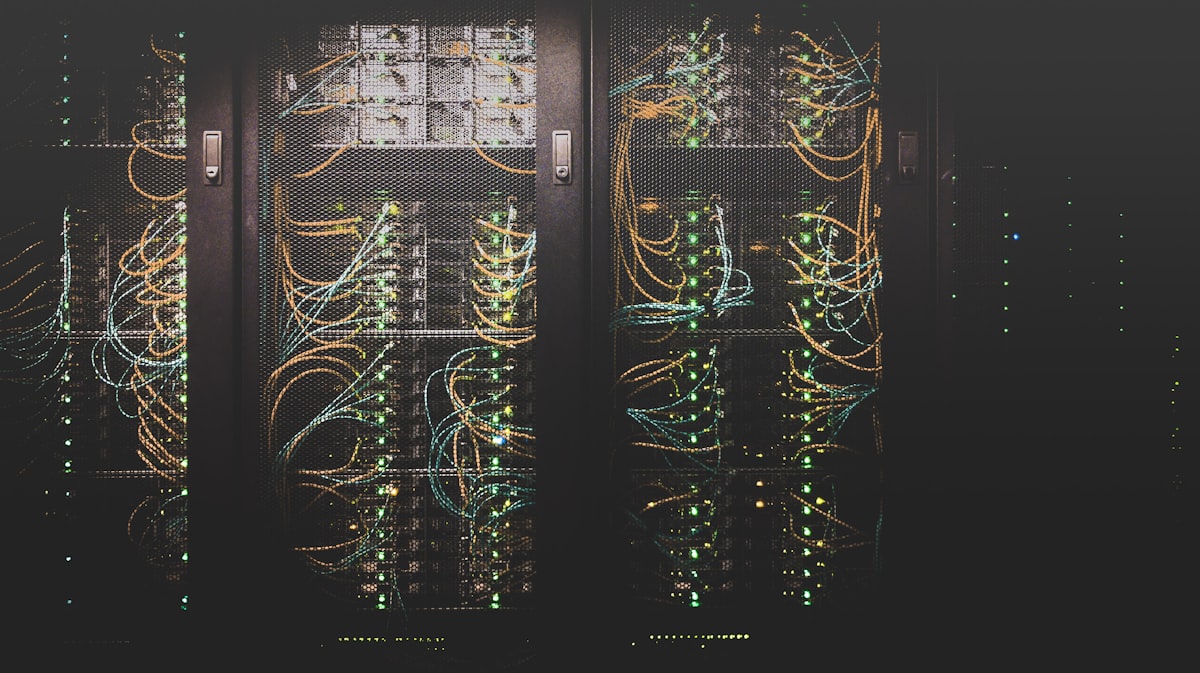
Figure 1: High-throughput MCP server handling multiplexed JSON-RPC requests across local and cloud resources.
1. Architectural Foundations of MCP
MCP follows a client-server paradigm built on JSON-RPC 2.0. The protocol abstracts three primary capabilities:
- Resources: File-like data streams that can be read by clients (e.g. log files, DB schemas, system metrics).
- Prompts: Pre-templated system instructions exposed dynamically by servers.
- Tools: Executable functions that LLMs can invoke with structured input schemas.
2. Building an MCP Server in TypeScript
Using the official @modelcontextprotocol/sdk, you can create a production-ready stdio server in under 50 lines of code:
import { Server } from "@modelcontextprotocol/sdk/server/index.js";
import { StdioServerTransport } from "@modelcontextprotocol/sdk/server/stdio.js";
import { CallToolRequestSchema, ListToolsRequestSchema } from "@modelcontextprotocol/sdk/types.js";

const server = new Server(
  { name: "stack-hive-analytics", version: "1.0.0" },
  { capabilities: { tools: {} } }
);

server.setRequestHandler(ListToolsRequestSchema, async () => ({
  tools: [
    {
      name: "query_database_stats",
      description: "Returns real-time query performance and latency metrics",
      inputSchema: {
        type: "object",
        properties: {
          timeframe: { type: "string", enum: ["1h", "24h", "7d"] }
        },
        required: ["timeframe"]
      }
    }
  ]
}));

const transport = new StdioServerTransport();
await server.connect(transport);
console.error("MCP Server listening on stdio...");LLM Token & Prompt Caching Cost Estimator
Prompts for Building High-Performance Model Context Protocol (MCP) Servers in TypeScript & Go
Recommended AI Tools
Related Tutorials
 Agentic AI
 Building Real-Time Voice & Video Agents with Gemini 2.0 Multimodal Live API
A complete technical implementation guide for streaming audio PCM and camera frames over WebSockets to Google Gemini 2.0 Flash with sub-300ms latency and function calling.
 Dr. Aris Thorne
  Infrastructure & DevOps
 Deploying DeepSeek R1 671B on Kubernetes: vLLM FP8 Cluster Architecture Blueprint
Architectural blueprint for running self-hosted DeepSeek R1 across NVIDIA H100 nodes: tensor parallelism, KV cache memory calculations, and production Kubernetes manifests.
 Maya Lin
  Prompt Engineering
 Zero-Hallucination Structured Outputs & Prompt Caching: Pydantic & Zod Guide
Eliminate schema drift and cut token overhead by 75% using constrained grammar decoding, strict JSON schema compilation, and prefix caching.
 Julian Ramos